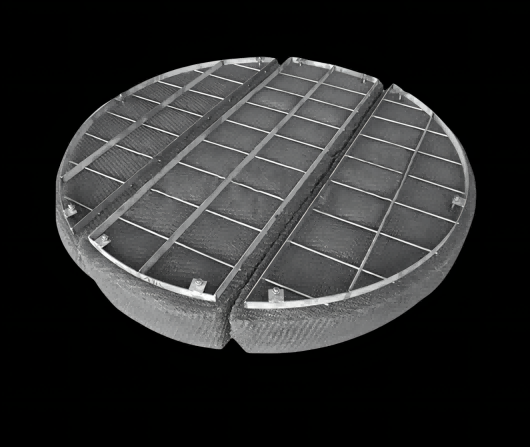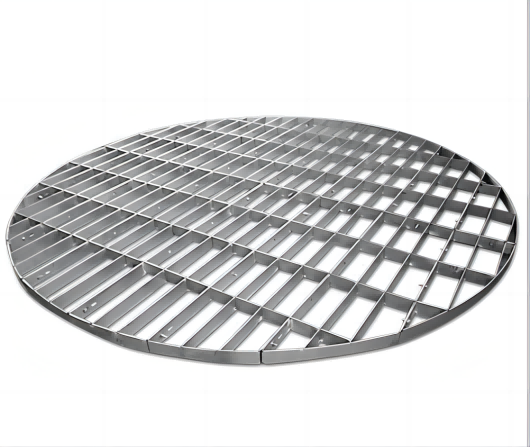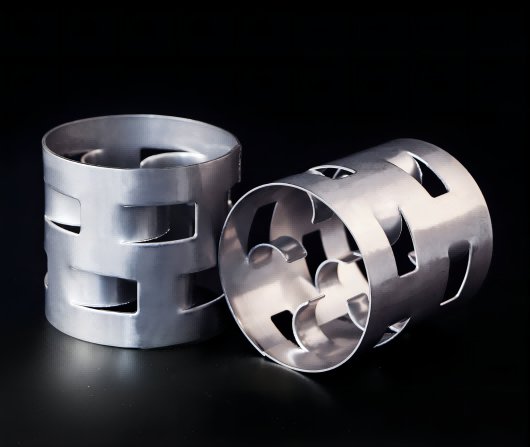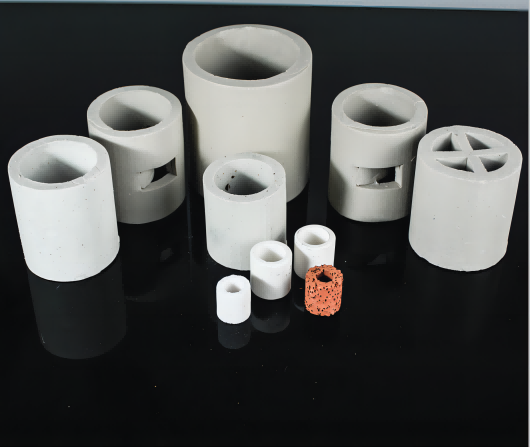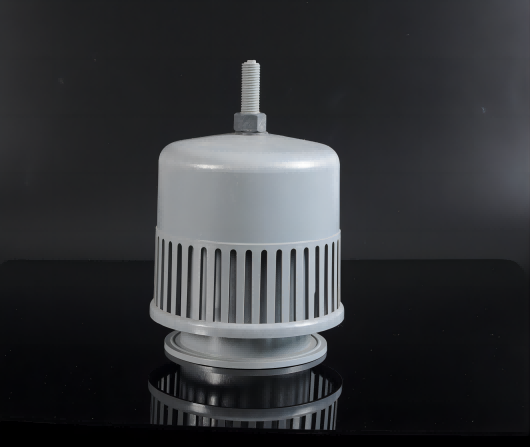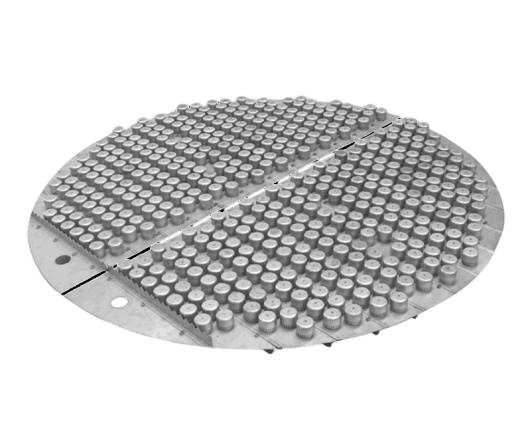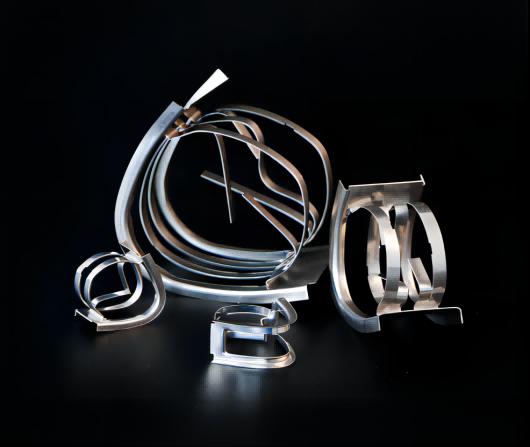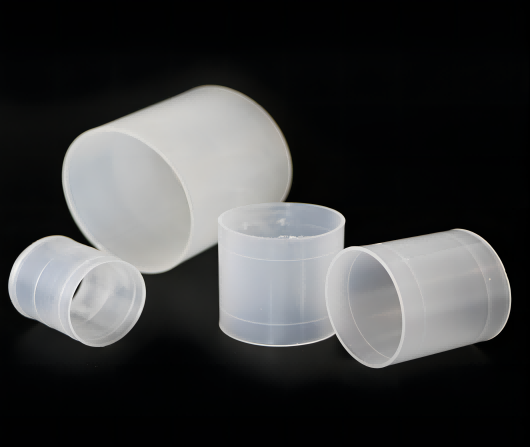

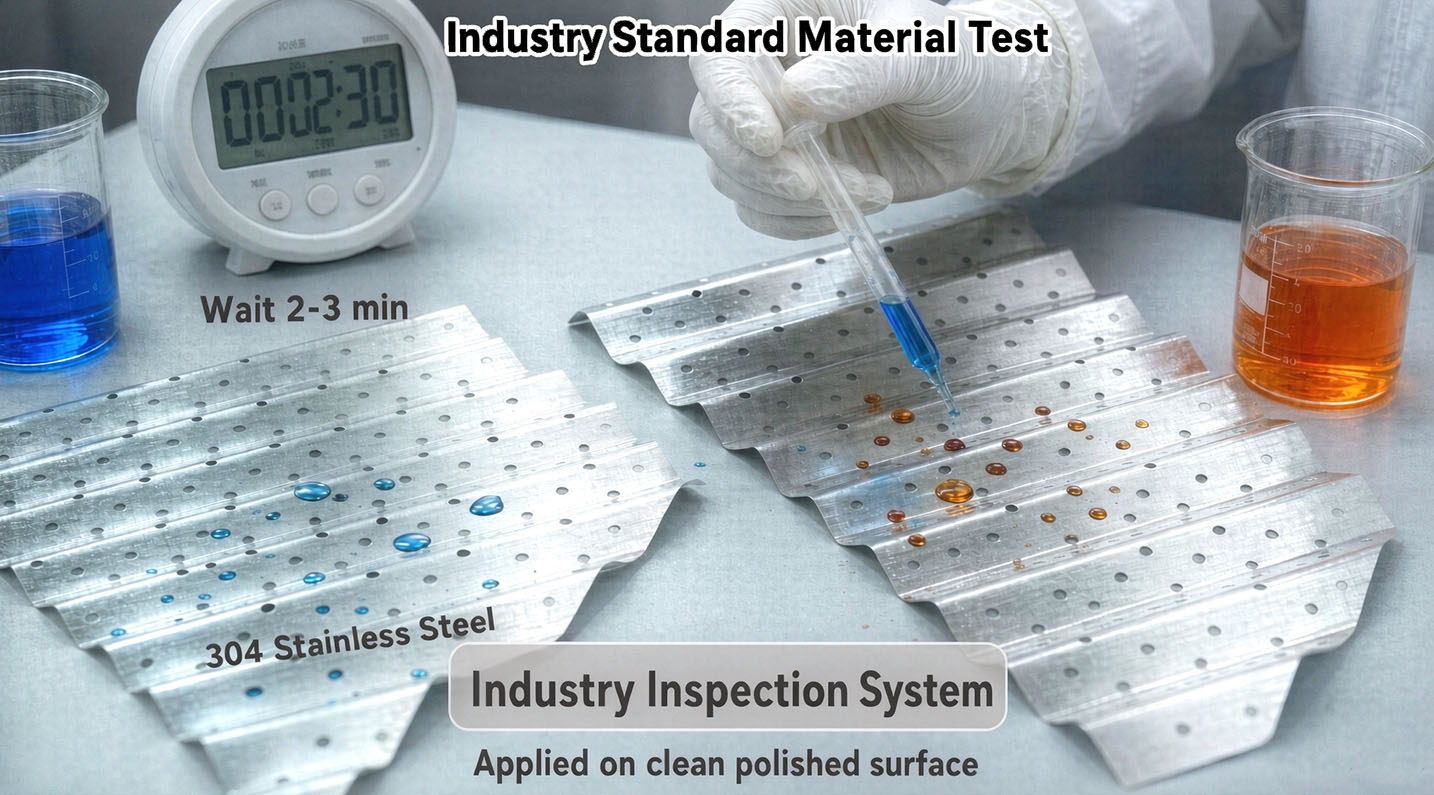
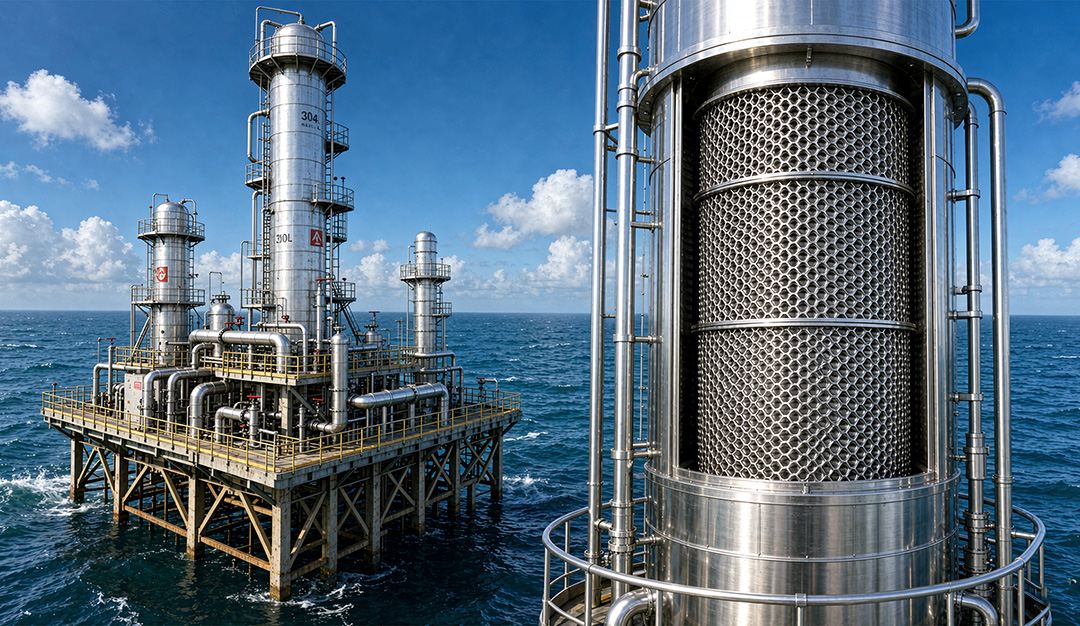
Figure 1: Visual comparison of 304 (Left) and 316L (Right) structured packing surfaces.
Material Selection Alert: Choosing between 304 and 316L for your Metal Structured Packing isn't just about the budget—it's about preventing catastrophic failure. While 304 (SS304) is the cost-effective workhorse, 316L (SS316L) offers critical Molybdenum-based protection against chlorides. Let's break down the facts.
The core difference lies in the alloying elements. Both are Austenitic Stainless Steels, but 316L contains 2-3% Molybdenum (Mo), which 304 lacks.
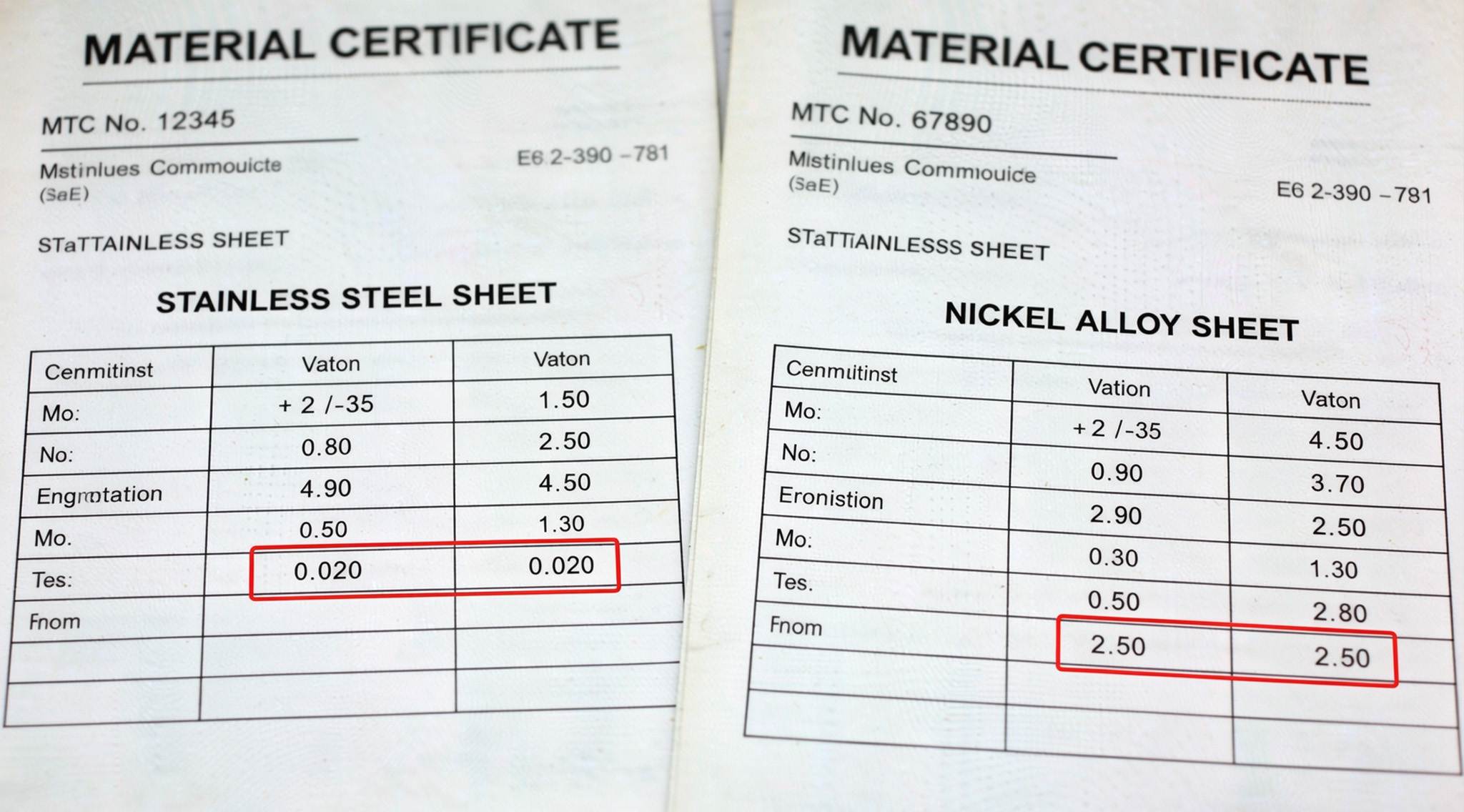
| Element | 304 (SS304) | 316L (SS316L) | Impact |
|---|---|---|---|
| Chromium (Cr) | 18 - 20% | 16 - 18% | Forms passive layer (corrosion resistance). |
| Nickel (Ni) | 8 - 10.5% | 10 - 14% | Stabilizes Austenite structure. |
| Molybdenum (Mo) | 0% | 2 - 3% | Resists pitting & crevice corrosion. |
| Carbon (C) | ≤ 0.08% | ≤ 0.03% | "L" means Low Carbon (prevents weld decay). |
Engineers use the Pitting Resistance Equivalent Number (PREN) to quantify corrosion resistance. The formula is: PREN = %Cr + 3.3 × %Mo + 16 × %N
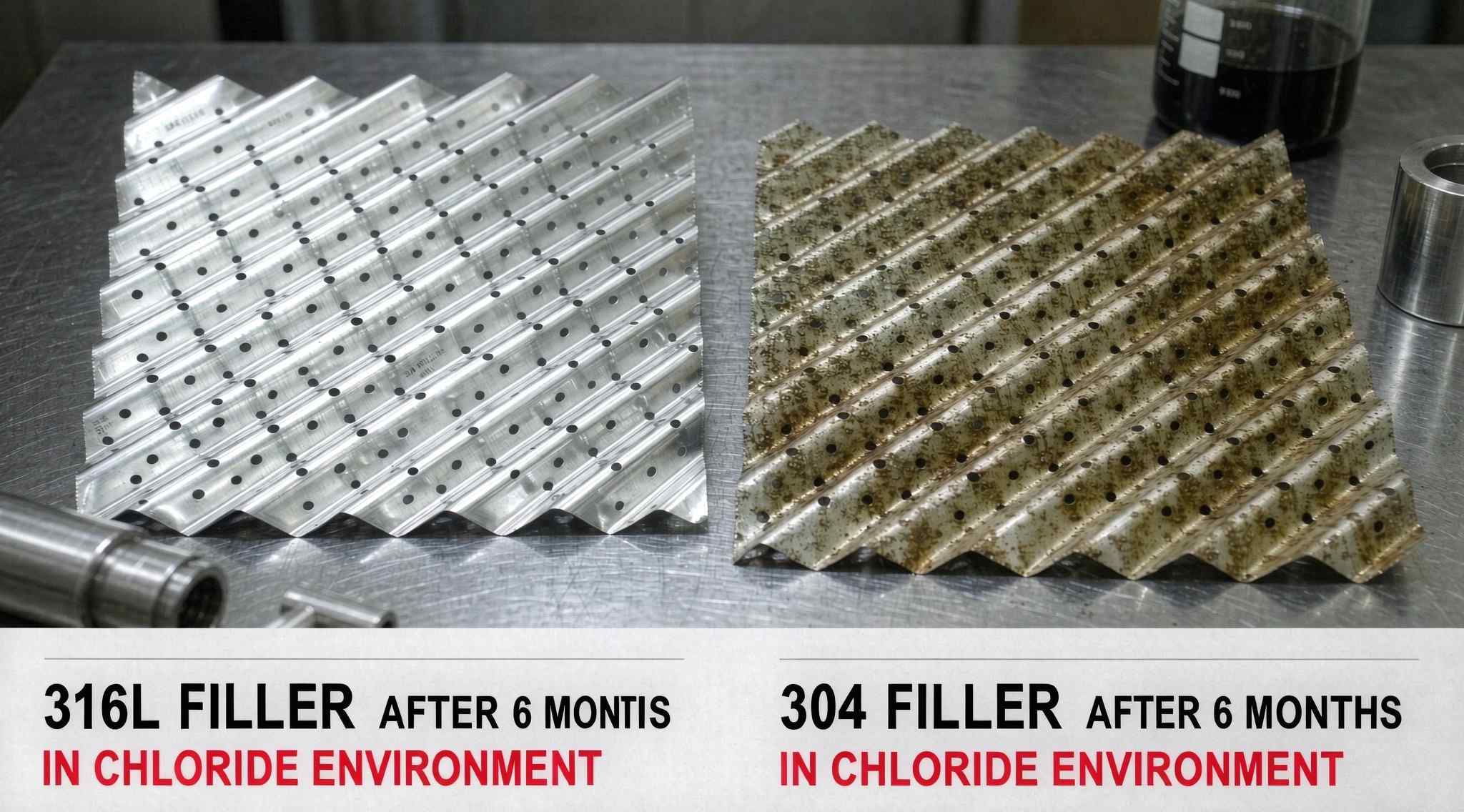
Figure 2: Pitting corrosion on 304 (Left) vs. intact 316L (Right) after chloride exposure.
304 stainless steel typically fails when chloride (Cl-) concentrations exceed 50-100 ppm at elevated temperatures. 316L can often tolerate 1000-2000 ppm under similar conditions. If your process involves seawater, brine, or acidic chlorides, 316L is not just an option—it's mandatory.
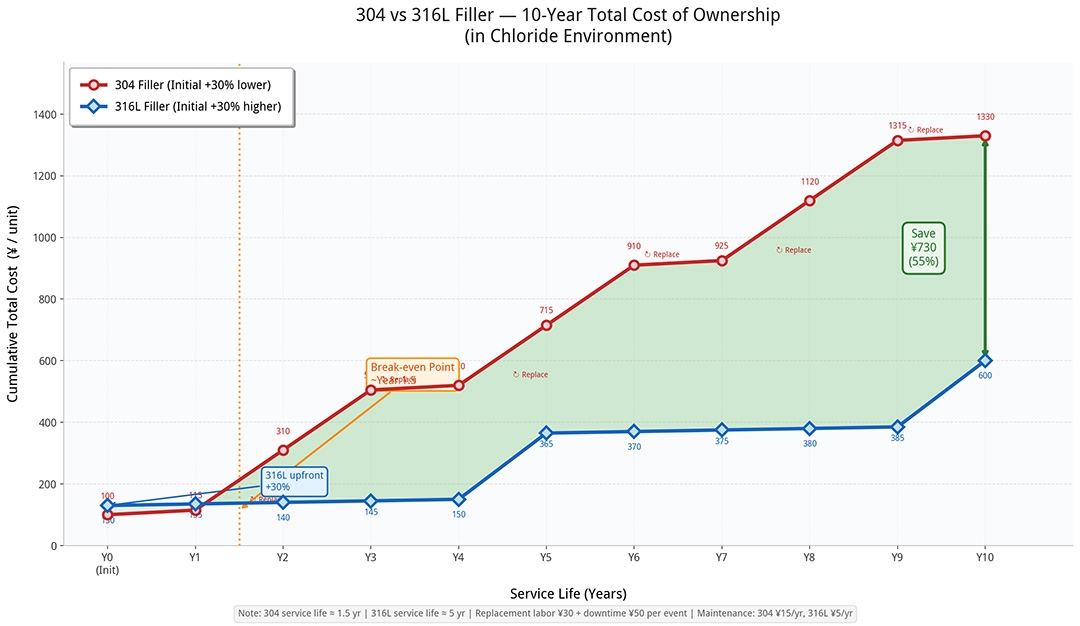
While 316L packing costs roughly 20-40% more upfront than 304, the TCO tells a different story:
| Choose 304 if... | Choose 316L if... | Critical Factor |
| Process is non-corrosive. | Chlorides (Cl-) are present. | Chloride Concentration. |
| Atmospheric temperature. | High temperature (>60°C). | Temperature Sensitivity. |
| Budget is the primary constraint. | Long-term reliability is key. | Total Cost of Ownership. |
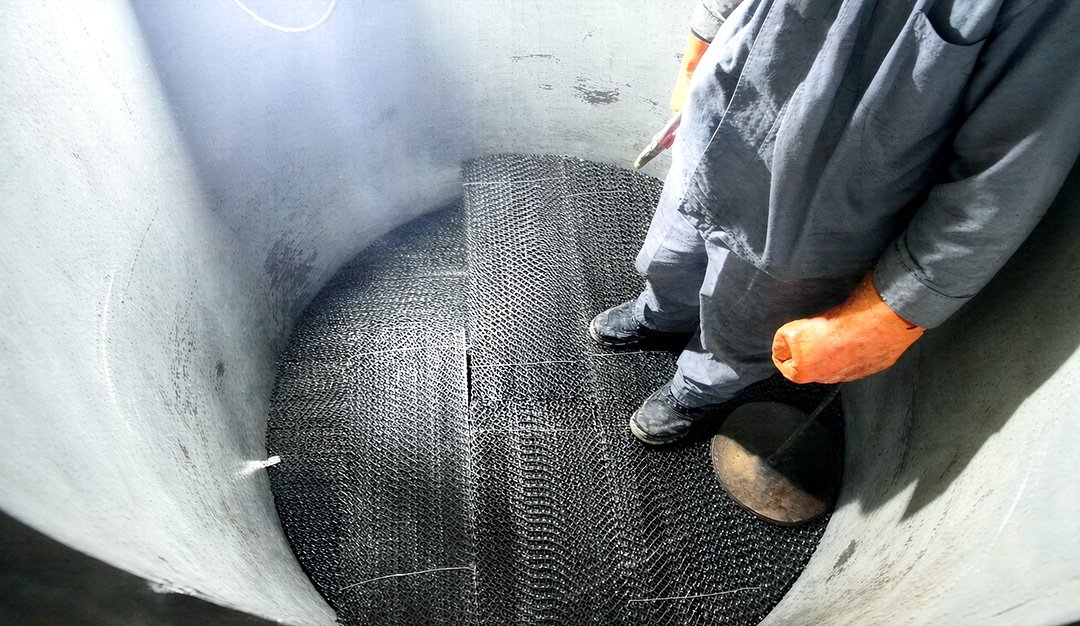
The "L" in 316L stands for "Low Carbon" (≤0.03%). This is crucial for Structured Packing because the thin metal sheets are often welded during module assembly or installation. Low carbon prevents sensitization (chromium carbide precipitation) at weld joints, which could otherwise lead to rapid intergranular corrosion. Always ensure your supplier provides material mill certificates (MTC) verifying the "L" grade.
Q: Can I use 304 packing in a coastal refinery?
A: Generally, no. Atmospheric salt (NaCl) deposits and high humidity create a corrosive micro-environment. 316L is the standard for coastal or offshore installations.
Q: Is 316L always better than 304?
A: No. In sulfuric acid environments at high concentrations and temperatures, neither 304 nor 316L performs well; you would need Alloy 20 or Hastelloy. In pure, hot caustic (NaOH) service, 304 often outperforms 316L.
Send us your process parameters (Temperature, Chlorides, pH). Our engineers will recommend the optimal alloy for your structured packing.
Contact FXSINO: jackieqiu9202@gmail.com | +86 18507999558
 Adresse
: Intersection of Jinguang Avenue and Chongqing Middle Road, Anyuan Industrial Park, Anyuan District, Pingxiang City, Jiangxi
Adresse
: Intersection of Jinguang Avenue and Chongqing Middle Road, Anyuan Industrial Park, Anyuan District, Pingxiang City, Jiangxi Tél
: +86-18507999558
Tél
: +86-18507999558 E-mail
: sales@fxsino.com
E-mail
: sales@fxsino.com WhatsApp
:
+86-18507999558
WhatsApp
:
+86-18507999558 Réseau IPv6 pris en charge
Plan du site
| XML | Blog
| politique de confidentialité
Réseau IPv6 pris en charge
Plan du site
| XML | Blog
| politique de confidentialité